Key Takeaways
- Veneers are thin shells bonded to the front of your teeth to cover chips, stains, gaps, or uneven shapes.
- Enamel removal is required for most veneers and cannot be undone.
- Veneers themselves typically last 10 to 15 years before needing replacement.
- Porcelain and composite veneers differ in durability, cost, and how much enamel is removed.
- Daily habits and regular dental checkups can help your veneers last longer.
Veneers Involve Permanent Changes
You’ve probably looked at your smile and wished something looked a little different. Maybe a chipped tooth, some stubborn staining, or a small gap has been bothering you for years. That’s why, at CHV Dental, we offer veneers as a popular option for improving the look of your teeth.
However, before you commit, it helps to know exactly what you’re signing up for. If you’re curious how veneers compare to other cosmetic options, our dental crowns vs. veneers guide is a helpful place to start.
Veneers are not reversible. Once enamel is removed to place them, your teeth will always need some form of covering. The veneers themselves can be replaced, but the preparation step is a lifelong commitment. Here’s what that means for you.
What Veneers Actually Do to Your Teeth
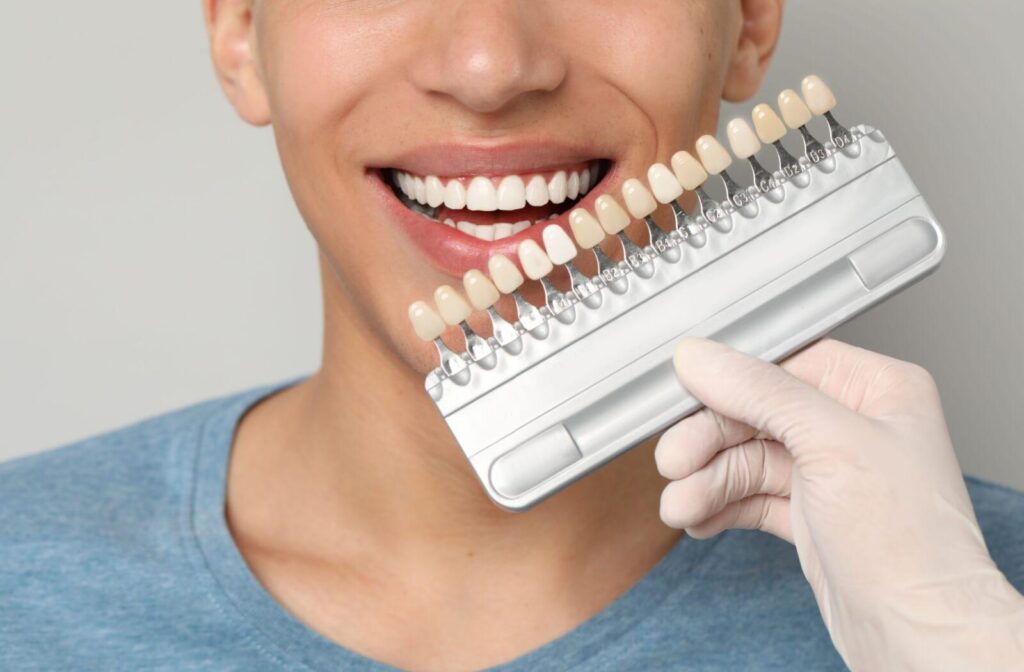
A veneer is a thin shell, usually made from porcelain or composite resin, that gets bonded to the front surface of a tooth. It covers whatever you want to hide, whether that’s a chip, a deep stain, a small gap, or an uneven edge.
To make room for the shell, a small amount of enamel has to be removed from the tooth’s surface. Enamel doesn’t grow back, so this makes the procedure a long-term commitment, not just a cosmetic touch-up.
The 2 Main Types of Veneers
Porcelain Veneers
Porcelain veneers are custom-made in a dental lab to match the shape and colour of your natural teeth. They’re durable, stain-resistant, and tend to look quite natural. However, because they require more enamel removal than composite veneers, the commitment is greater.
Composite Veneers
Composite veneers are applied directly to your teeth in a single visit using a tooth-coloured resin. Less enamel is typically removed compared to porcelain. They’re easier to adjust or repair if something chips, though they don’t tend to last as long. For someone who wants to try veneers with a smaller upfront commitment, composite can be a reasonable place to start.
So, Are Veneers Permanent?
The Commitment You’re Making
The enamel removed during prep cannot be put back. That’s the permanent part. The veneers themselves, however, are not meant to last forever. Porcelain veneers typically hold up for 10 to 15 years with proper care before they need to be replaced.
Think of it this way: you’re not committing to one specific veneer forever. You’re committing to always having something covering that tooth.
When Replacement Is Needed
When a veneer reaches the end of its lifespan, the old one is removed and a new one is fitted in its place. Because the enamel underneath has already been altered, the tooth will need a new veneer going forward.
Downsides Worth Knowing About
Veneers can genuinely change how your smile looks, but there are a few things to keep in mind before moving forward.
- Your teeth may feel more sensitive to hot and cold after the enamel is removed.
- Veneers can chip, crack, or come loose, especially if you bite into hard foods or grind your teeth.
- Most dental insurance plans don’t cover veneers, since they’re considered to be cosmetic.
None of these are reasons to avoid veneers entirely, but understanding them ahead of time will help you make a decision you’re comfortable with. If teeth grinding is a concern for you, learning more about bruxism and its effects on teeth can help you understand the risks before moving forward.
How to Make Your Veneers Last
Daily Habits That Help
Taking care of veneers doesn’t require a complicated routine. A soft-bristled toothbrush and gentle daily brushing can help protect both the veneer surface and the gum tissue around it. Flossing daily and rinsing with an antibacterial mouthwash can also help keep the surrounding teeth and gums healthy, which supports the longevity of your veneers.

What to Avoid
A few habits can shorten the life of your veneers faster than normal wear would.
- Biting directly into hard foods like ice or whole apples puts pressure on the edges of your veneers.
- Grinding your teeth at night wears down the surface over time. A nightguard can help reduce that damage.
Seeing a dentist in Calgary for regular dental checkups also plays a role in protecting your veneers. Catching a small crack or a loose edge early means a simpler fix, rather than a full replacement down the road.
If you’re considering veneers and want to talk through whether they’re a good fit for your smile, our team at CHV Dental is here to walk you through your options. There are no high-pressure conversations here, just clear information, so that you can make the choice that’s right for you.
Reach out to request an appointment today.